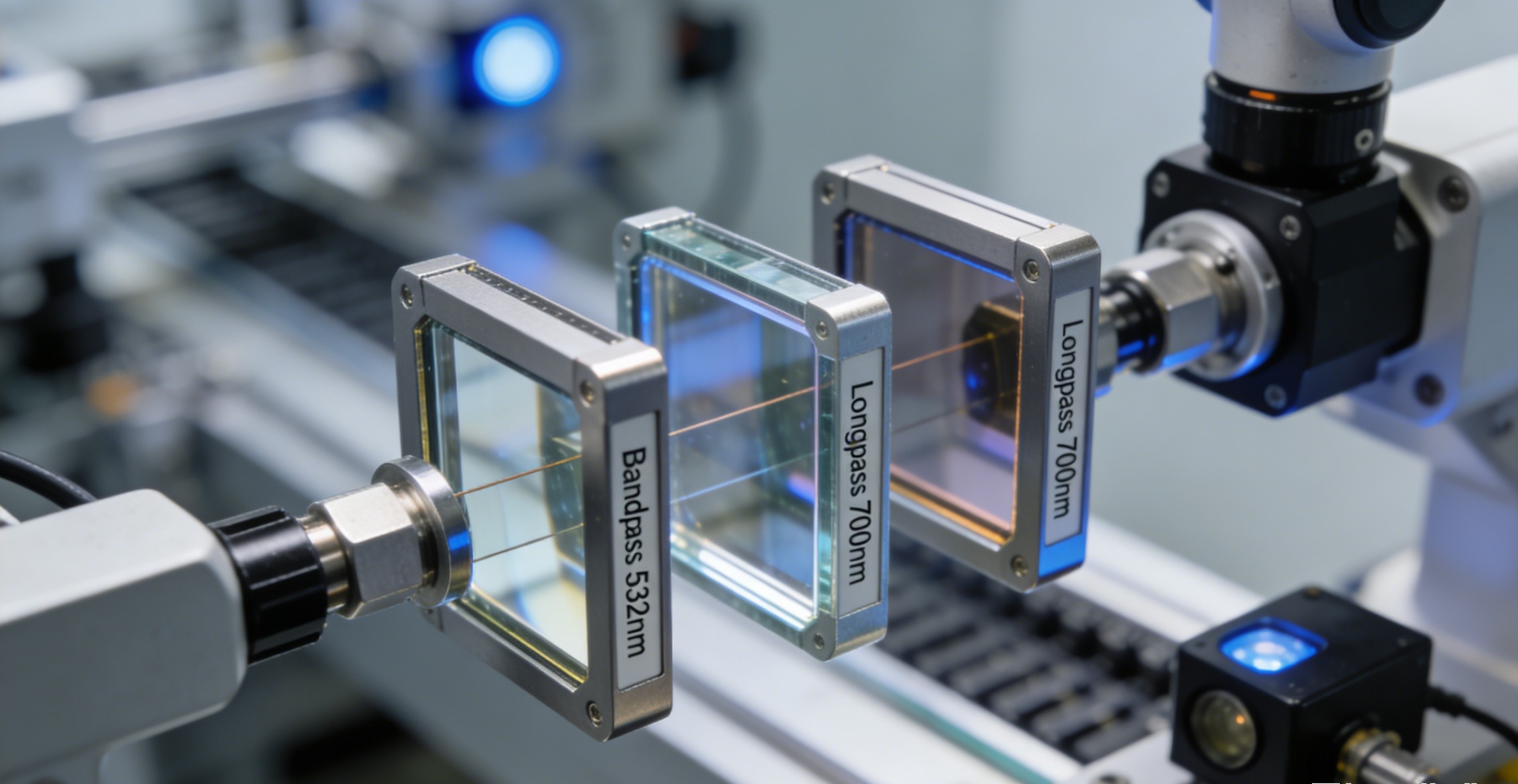
Learn about the role of optical glass and filters in industrial automation, LiDAR, machine vision, and other high-precision optical systems, with practical insights for engineers and buyers.

In May 2026, Baidu ERNIE 5.1 (Enhanced Representation through kNowledge IntEgration) topped the LM Arena search list, ranking 4th globally and 1st domestically. It achieved performance breakthroughs with only 6% of the training cost of industry peers, becoming a core hot topic in Baidu and the entire AI circle. This revolution in AI computing efficiency seems to be a victory of algorithms and models, but it is actually inseparable from the hardcore support of optical glass—a key underlying material for AI optical modules and precision optical systems. From high-speed optical module signal transmission to intelligent vision imaging, and then to optical interconnection in AI data centers, optical glass has long been an “invisible cornerstone” running through the AI industrial chain and a key track for the breakthrough of domestic substitution in high-end manufacturing.

What is Optical Glass? More Than a “Transparent Material”, It’s the “Optical Vessel” of Precision Technology

Optical glass is a special transparent material made from silicates, borates and other main raw materials through high-temperature melting and precision annealing. Its core value lies in precisely controlling the propagation of light (refraction, reflection, transmission), serving as the “core skeleton” of all optical systems. Unlike ordinary architectural glass, high-quality optical glass has nanoscale requirements for uniformity, light transmittance and thermal stability—critical for applications in AI optical modules and special optical equipment: the refractive index error of high-end optical glass must be controlled within ±0.0001, and the surface roughness Ra value is less than 0.005μm, which can be called “transparent precision ceramics” for modern optical technology.
According to performance and applications, optical glass can be divided into three categories:
  • Ordinary Optical Glass: Crown glass (low refractive index, low dispersion) and flint glass (high refractive index, high dispersion), mostly used in consumer optical products such as camera lenses, telescopes and glasses;
  • Special Optical Glass: Ultraviolet glass, infrared glass, lanthanide high-transmittance glass and filter glass, suitable for high-end scenarios such as semiconductor lithography, medical endoscopes and lidar;
  • Ultra-high Performance Optical Glass: Fluoride glass and quartz glass, with ultra-high light transmittance and ultra-low expansion coefficient, are core materials for AI optical modules, aerospace sensing and optical storage.

Hot Topic Connection: Behind Baidu AI’s Breakthrough, How Does Optical Glass Support Computing Power and Vision?

1. ERNIE 5.1’s Efficient Computing Power: The “Glass Heart” in Optical Modules

The reason why Baidu ERNIE 5.1 achieves performance leaps with only 6% of the cost lies in the ultimate optimization of computing power utilization, and the computing power circulation in AI data centers completely relies on high-speed optical modules—with optical glass as their core material.
Currently, the copper cable transmission of AI clusters (such as NVIDIA 10,000-card clusters) has reached its physical limit, while the high-transmittance coupling lenses and collimating lenses made of optical glass can transmit optical signals at a rate of 1.6T per second, with latency reduced to the nanosecond level—key to supporting Baidu ERNIE 5.1’s efficient computing. In May 2026, NVIDIA invested 3.2 billion US dollars in Corning to lock in optical glass production capacity, precisely because “the end of copper is glass”—the performance of optical glass directly determines the upper limit of AI computing power. The efficient training of the Baidu ERNIE large model is essentially inseparable from the large-scale application of domestic optical glass in high-speed optical modules; optical glass with lower loss and higher stability greatly improves the efficiency of computing power transmission, promotes domestic substitution, and reduces costs accordingly.

2. AI Vision and Multimodality: Optical Glass is the “Eye of Perception”

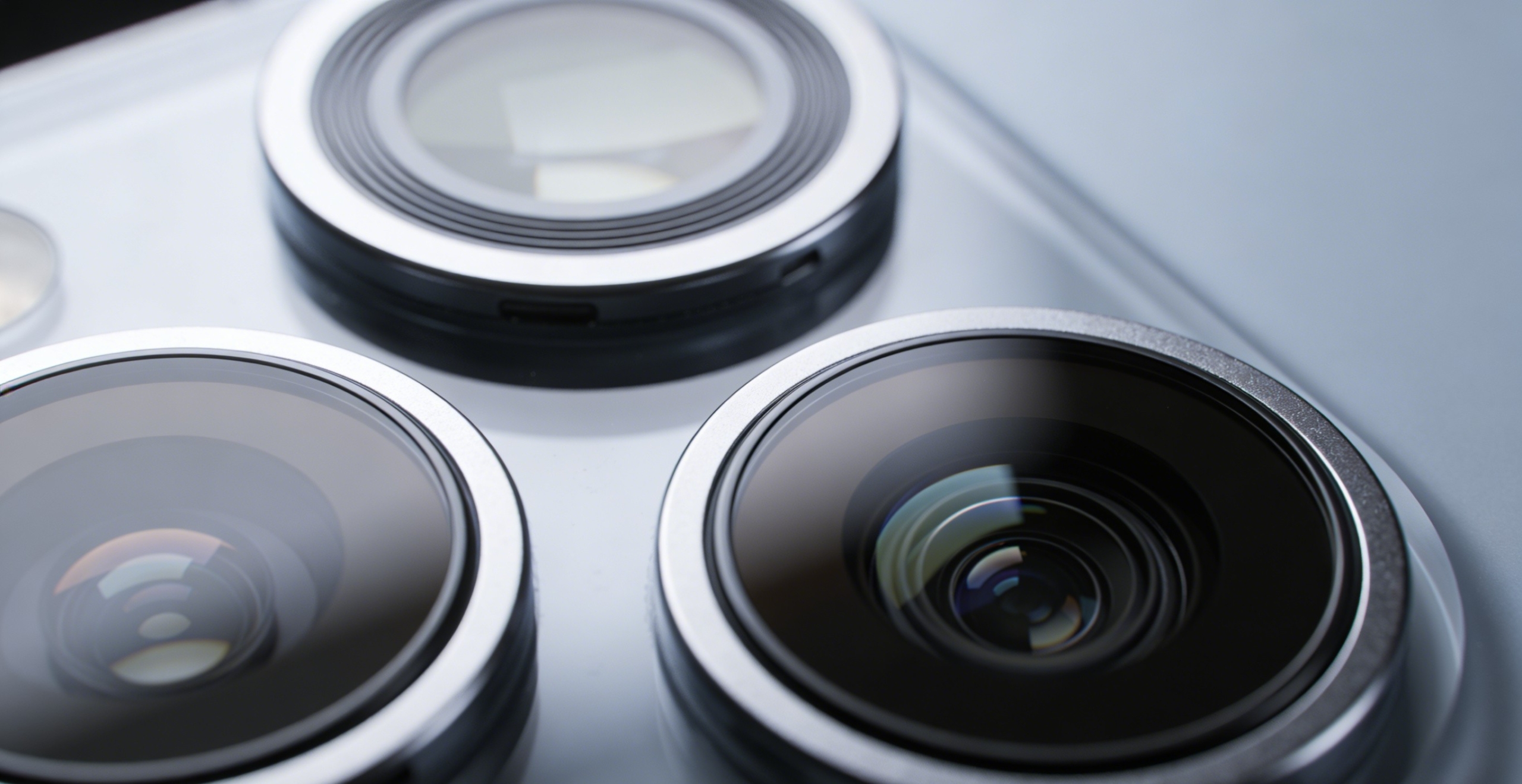
The multimodal capabilities (image recognition, video understanding) of Baidu ERNIE large model are centered on optical imaging systems, and optical glass lenses are the key to imaging quality. Whether it is mobile phone cameras, intelligent surveillance, AR/VR devices or industrial inspection cameras, optical glass lenses are needed to capture clear, high-fidelity images—lanthanide glass with high refractive index and low dispersion can eliminate chromatic aberration and improve resolution; ultra-thin optical glass is suitable for the needs of lightweight intelligent devices.
In the first quarter of 2026, China’s smart glasses shipments surged by 36.2% year-on-year, among which the penetration rate of optical glass lenses has reached more than 40%—a testament to the growing demand for special optical glass in consumer and industrial AI devices. The AI visual collaboration solution displayed at Baidu AI Developer Conference (Create 2026) can shorten the processing time of 300 images from 1 day to 5 minutes, which is precisely driven by the collaboration of high-precision optical glass lenses + AI algorithms, highlighting the indispensable role of optical glass in AI vision.

3. New Optical Storage Track: The “10 Billion-Year Memory” of Optical Glass

Recently, “AI data storage crisis” has been a hot topic on Baidu Search, and optical glass is becoming the ultimate solution for cold storage in AI data centers. The Pb-level glass optical storage single disk developed by Shanghai Institute of Optics and Fine Mechanics has a capacity of PB level (1PB=1024TB) and a stability of more than 13.8 billion years, which can perfectly meet the long-term archiving needs of massive AI data. Baidu Netdisk Enterprise Edition serves 800,000 enterprise users, and its cold storage solution has begun to pilot the introduction of optical glass storage media—relying on the high stability and low energy consumption of optical glass to greatly reduce AI data storage costs, while promoting the domestic substitution of optical glass in the storage field.

Industry Trend: The 2026 Optical Glass Market Booms, Domestic Substitution Accelerates

1. Market Scale: Expected to Exceed 47 Billion Yuan in 2026, Special Glass Leads Growth

According to data from the China Optics and Optoelectronics Industry Association, the scale of China’s optical glass market reached 41.86 billion yuan in 2025, a year-on-year increase of 12.3%; driven by demand from the AI, automotive, and semiconductor industries in 2026, the scale is expected to exceed 47 billion yuan. Among them, the growth rate of special optical glass, such as ultraviolet/infrared glass and high-uniformity lanthanide glass, reached 18.7%, far higher than the industry average. This growth is mainly driven by the booming demand for AI optical modules and automotive optical components, as well as the acceleration of domestic substitution.

2. Domestic Breakthrough: Breaking Overseas Monopoly, Achieving “From 0 to 1” in High-End Fields

In the past, high-end optical glass (such as deep ultraviolet glass for semiconductor lithography and high-transmittance quartz glass for AI optical modules) has long been monopolized by overseas giants. However, in 2026, domestic technology ushered in a concentrated breakthrough:
  • CNBM Photonics Technology has conquered the 1400℃ high-temperature continuous drawing process, increasing the qualification rate of domestic optical fiber preforms from 1.8% to 54.2%, reducing costs by 28.7% and breaking the monopoly of night vision optical glass;
  • Domestic fluoride optical glass has achieved mass production, replacing imports in AI optical modules and medical endoscopes, with a price only 70% of that of overseas products;
  • Optical glass industrial belts in Jiangsu, Zhejiang and other regions have formed a complete industrial chain of “melting – cold processing – coating – component assembly”, which can provide customized optical solutions for AI, automotive and other customers.

3. Downstream Demand: Three Major Tracks Drive Growth—AI, Automotive and Medical

  • AI Computing Power: The explosion of demand for high-speed optical modules and optical storage drives the annual growth of demand for high-transmittance and low-loss optical glass by 25%;
  • Automotive Optics: The popularization of autonomous driving lidar, automotive cameras and HUD (Head-Up Display) has led to a surge in demand for automotive-grade optical glass. The market scale is expected to reach 8 billion yuan in 2026;
  • Medical Optics: The upgrading of endoscopes, surgical microscopes and optical diagnostic equipment makes high-uniformity and corrosion-resistant special optical glass a rigid demand.

Opportunities and Challenges for Domestic Optical Glass: Focus on the AI Track to Break Through the High-End Market

1. Core Opportunities: AI Wave + Policy Support, Golden Period for Domestic Substitution

The breakthrough of Baidu ERNIE large model confirms the importance of independent and controllable AI computing power. As an underlying material, optical glass has been included in the key support areas of the national “high-end manufacturing upgrading”. Policies encourage the localization rate of optical components in scientific research instruments, intelligent driving, AI data centers and other fields to be ≥60%, providing a broad market space for domestic optical glass enterprises. At the same time, the fluctuation of overseas supply chains has intensified, and downstream customers (such as AI optical module manufacturers and automotive lens enterprises) have taken the initiative to seek domestic substitution, so domestic optical glass enterprises are facing the dual opportunities of “technological breakthrough + market expansion”.

2. Existing Challenges: High-End Technology, Precision Processing and Brand Awareness Need to Be Improved

Although domestic optical glass has achieved a breakthrough from 0 to 1, there is still a gap with overseas giants in high-end indicators such as nanoscale uniformity control, ultra-low expansion coefficient and batch stability. At the same time, the precision cold processing capacity (such as aspheric grinding and nanoscale coating) is insufficient, and the yield rate of high-end optical components is low; downstream customers have insufficient brand awareness of domestic optical glass, and the penetration rate in the high-end market still needs to be improved.

Conclusion: Optical Glass—The “Optical Foundation” of the AI Era, the “Hardcore Power” of Domestic Manufacturing

From the computing power breakthrough of the Baidu ERNIE large model to the precise perception of AI vision, and then to the long-term archiving of optical storage, optical glass has always been the “invisible cornerstone” running through the AI industrial chain. In 2026, the continuous advancement of the AI wave is transforming optical glass from an “unpopular material” into a “core rigid demand” for AI optical modules, automotive optics, and medical equipment. With the booming market scale and accelerating domestic substitution, the golden age of China’s optical glass industry has arrived.
For domestic optical glass enterprises, focusing on the three high-end tracks of AI, automotive and medical, deepening the technology of special optical glass and improving precision processing capacity will enable them to occupy a place in the global optical material competition and let “Chinese glass” support the “Chinese computing power” of the AI era.

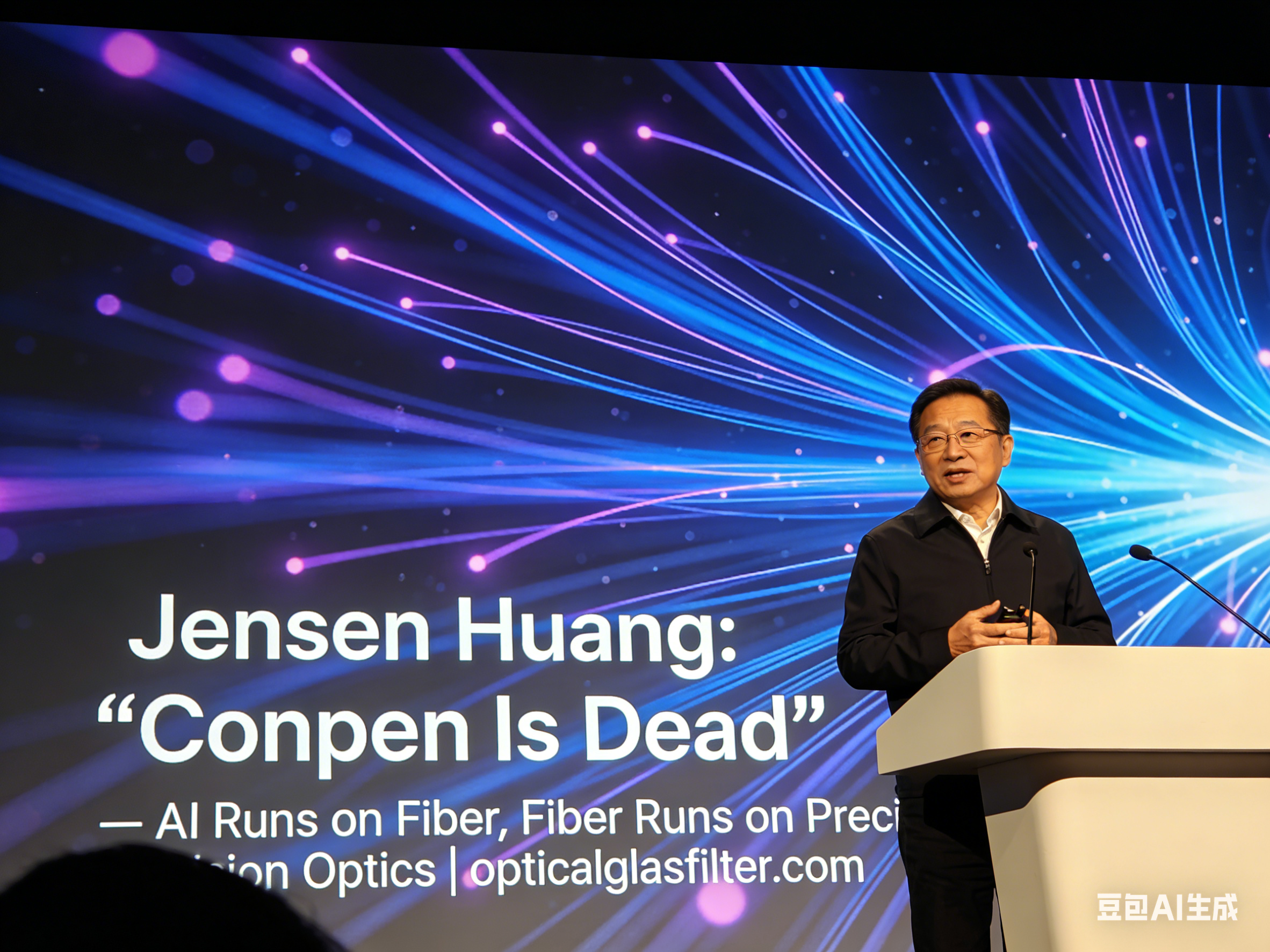
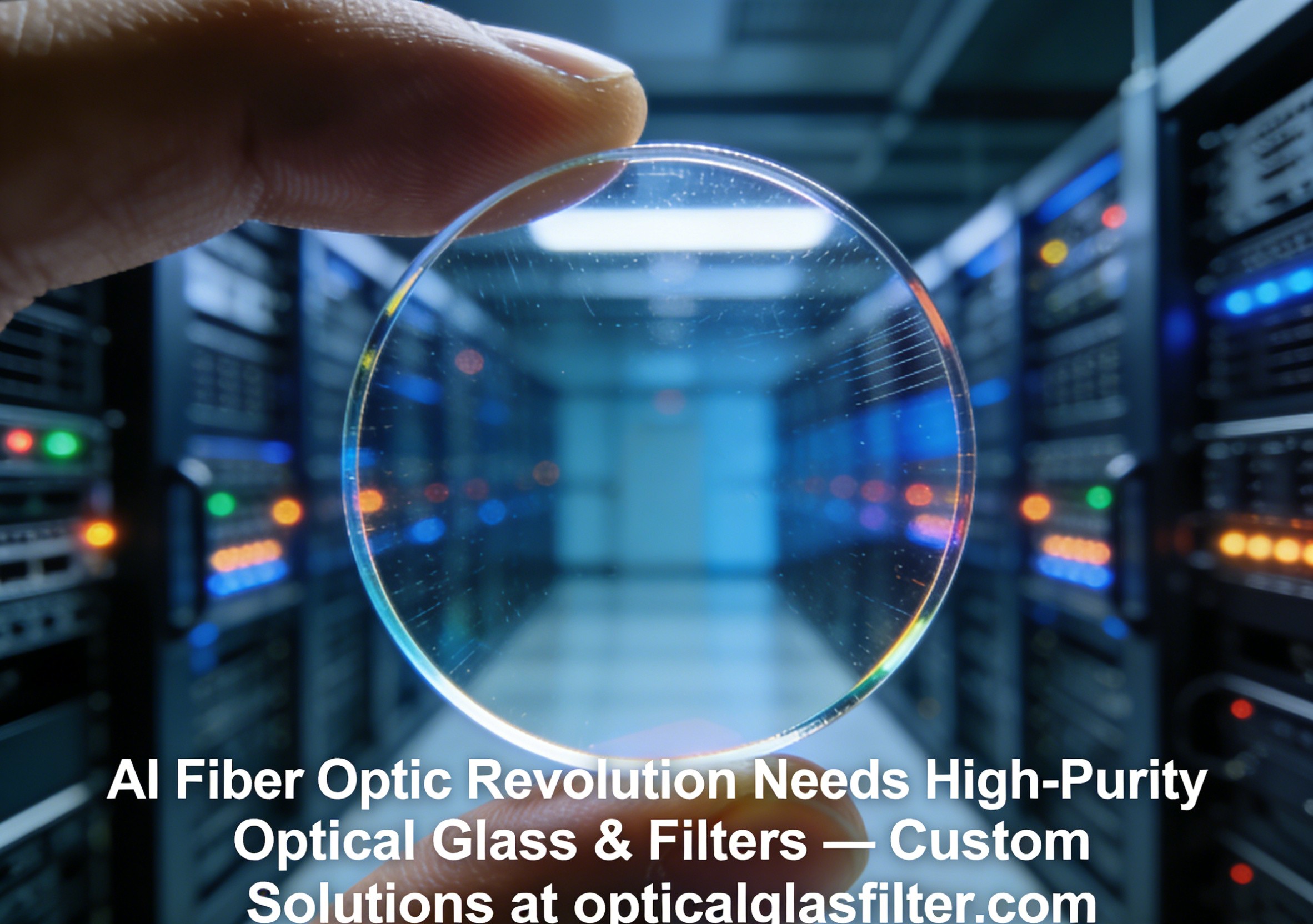
Introduction: The “Copper Is Dead” Moment

In a landmark interview on May 7, 2026, NVIDIA CEO Jensen Huang delivered a message that sent ripples through the global tech and optics industries: “Copper can no longer keep up. The next era of AI infrastructure will be built on optical connectivity.”
With AI clusters scaling to tens of thousands of GPUs, data centers are hitting hard physical limits with copper cables: severe signal attenuation, electromagnetic interference (EMI), and unsustainable power consumption. Huang’s verdict is clear: the age of copper is ending; the age of light has arrived.
To back his words with action, NVIDIA has invested up to $2.7 billion in fiber giant Corning, including billions in advance payments to expand fiber production capacity by 50%+ and build three new “fiber super factories.” This is not a trend—it’s a paradigm shift that will reshape data center interconnects for decades.

Why AI Needs Fiber—and Better Optical Components

Fiber optics outperforms copper on every critical metric for AI:
  • Unlimited bandwidth: A single fiber carries terabits per second—enough to connect thousands of GPUs in real time.
  • Zero EMI & low loss: Light signals suffer almost no attenuation over kilometers, enabling massive cluster scaling.
  • Lower power: Optical interconnects cut power use by 70–80% compared to high‑speed copper.
But fiber is only as good as the optical glass and filters that guide, shape, and protect light inside transceivers, switches, and CPO (Co‑Packaged Optics) modules—the very heart of Huang’s AI optical infrastructure.
Without precision optical glass and high‑performance filters, even the best fiber cables cannot deliver reliable, high‑speed, or error‑free data transmission.

Your Optical Glass & Filters: The Unsung Heroes of AI Connectivity

This is where opticalglasfilter.com comes in.
While the world focuses on fiber cables and GPU clusters, we specialize in the foundational optical components that make Huang’s vision possible:
  • High‑purity optical glass substrates for fiber collimators, lenses, and prisms
  • Precision optical filters (bandpass, edge, dichroic, IR‑cut) for WDM, CWDM, DWDM systems
  • Custom‑coated optical components optimized for 850 nm, 1310 nm, 1550 nm, and emerging 2 μm AI wavelengths
Our products are engineered for:
  • Ultra‑low insertion loss
  • High isolation & channel stability
  • Rugged reliability in data center temperature and humidity ranges
  • Scalable customization for CPO, silicon photonics, and next‑gen AI transceivers
In short: We provide the optical “purity and precision” that Huang’s AI fiber revolution depends on.

The Future Is Bright—And It’s Made of Glass

Jensen Huang’s “copper is dead” declaration is not just about fiber. It’s about the entire optical ecosystem—and that ecosystem starts with high‑quality optical glass and filters.
As AI data centers scale from millions to billions of optical ports, demand will surge for components that are:
  • More precise
  • More stable
  • More cost‑effective
At opticalglasfilter.com, we are ready to meet that demand. We combine decades of optical manufacturing expertise with strict quality control to deliver components that power the future of AI, one glass substrate and filter at a time.

Conclusion: Partner with Us for the AI Optical Era

The message from Jensen Huang is unambiguous: AI runs on light. Light runs on precision optics.
If you are a data center equipment manufacturer, transceiver designer, CPO developer, or optical system integrator—your next breakthrough starts with high‑quality optical glass and filters.

👉 Explore our full product line at opticalglasfilter.com

👉 Contact our engineering team for custom optical solutions tailored to your AI and fiber optic projects.

The copper era is ending. The optical revolution is here. Let’s build it—together.
Recent breaking news out of the United States has shined an unexpected spotlight on high-performance optical components: during a high-tension security incident at a high-profile dinner event, photos and footage clearly showed U.S. security personnel relying on a Chinese made red dot sight to maintain situational awareness and protect key figures in real time.
What many people outside the industry may not realize is that this is far from an isolated case. Chinese optical technology has quietly evolved from a budget alternative to a trusted, mission-critical component in professional tactical, law enforcement, and security systems worldwide.
image

The Incident That Put Chinese Optics in the Global Spotlight

Amid the chaos of the security response, one detail stood out sharply: the compact, rugged red dot sight mounted on the sidearm of a security agent. The model in question is widely recognized as a product designed and manufactured in China, known for its reliability, fast target acquisition, and robust build quality.
In a moment where split-second decisions and unwavering performance meant everything, this Chinese sight performed exactly as intended—proving that national origin no longer defines optical quality.

Why Chinese Optics Dominate Modern Tactical and Sporting Sights

The global shift toward Chinese-made gun sights and optical assemblies is driven by real-world performance, not just price. Here’s why they are trusted by professionals:

1. Precision Optical Glass & Coating Technology

High-end gun sights depend on low-distortion optical glass, multi-layer anti-reflective coatings, and precisely shaped lenses. Chinese manufacturers have mastered these processes, producing glass components with:
  • High light transmittance
  • Minimal chromatic aberration
  • Excellent impact and shock resistance
  • Consistent performance across extreme temperatures
These are the same core capabilities that power industrial optics, camera lenses, surveillance systems, and laser devices.

2. Advanced Filter & Optical Sensor Integration

Modern red dot sights and holographic sights rely on specialized optical filters to:
  • Block unwanted infrared and ambient light
  • Enhance dot brightness and clarity
  • Improve visibility in sunlight, low light, and fog
  • Extend battery life through efficient light management
This level of optical engineering was once dominated by Western manufacturers. Today, Chinese optical supply chains lead the world in volume, consistency, and innovation in these specialized filters and glass components.

3. Durability Built for High-Risk Environments

Security and tactical applications demand equipment that won’t fail when lives are on the line. Chinese sight manufacturers produce products that are:
  • Waterproof and fog-resistant
  • Shockproof to handle recoil and physical impact
  • Stable under vibration and rapid movement
  • Built for continuous duty in professional use
The fact that these sights are now standard issue for many security teams and law enforcement units speaks for itself.

Breaking Stereotypes: Performance Speaks Louder Than Labels

For years, certain narratives tried to paint advanced optics as an area where only Western products could be trusted. The recent U.S. security incident tells a different story:
Chinese optical components are no longer “budget options”—they are professional-grade tools chosen for performance.
From military and law enforcement sights to hunting optics, drone imaging, industrial detection, and scientific equipment, the world increasingly depends on high-quality Chinese optical glass and precision filter components.

The Future of Global Optics Is Multinational — And Chinese Tech Is Leading

As this high-profile event has shown, the global optical industry is no longer defined by regional blocs. It is defined by:
  • Manufacturing precision
  • Material science
  • Optical coating expertise
  • Consistent quality control
Chinese manufacturers excel in all these areas, making them indispensable to the global supply chain for gun sights, imaging systems, analytical instruments, and beyond.
Whether for professional security, outdoor sports, industrial detection, or cutting-edge optical systems, one thing is clear:
When performance matters most, the world chooses reliable optics—regardless of where they are made.

In the precision optics industry, a common misconception is that all colored or transparent plates are created equal. For an optical engineer or a procurement manager, mistaking a piece of “cheap glass” for a high-quality optical filter can lead to disastrous results: system noise, inaccurate data, or even hardware damage.

So, how can you tell the difference before the product is even mounted on your sensor? Here are the four critical dimensions to evaluate.

1. Spectral Precision and Slope Steepness

The most fundamental difference lies in the Transmission Curve.

  • High-Quality Filters: Feature a steep “cut-off” slope. If you need a 500nm Longpass filter, a high-quality one will block 490nm almost completely and transmit 510nm at peak efficiency.

  • Cheap Glass: Often has a “lazy” slope, meaning it leaks unwanted wavelengths into your system, creating “ghosting” or background noise in imaging.

  • Pro Tip: Always ask for a Batch-Specific Spectrophotometer Report instead of a generic datasheet.

2. Internal Quality: Bubbles, Striae, and Inclusions

What happens inside the glass is as important as the surface.

  • The “Flashlight Test”: Under a high-intensity light source, cheap glass often reveals tiny bubbles or “striae” (internal streaks caused by uneven cooling).

  • The Impact: These internal defects cause light scattering. In laser applications, these inclusions can absorb energy and cause the glass to crack or “burn” under high power. High-quality optical glass (like those from Schott or CDGM standards) is rated for strict inclusion classes.

3. Surface Quality (S/D) and Flatness

A filter is part of an optical path; it shouldn’t distort the wavefront.

  • Scratch/Dig (S/D): High-quality filters usually meet 40/20 or 20/10 Scratch-Dig standards. Cheap glass often shows micro-scratches under a microscope, which scatter light and reduce contrast.

  • Parallelism: Professional filters are ground to a high degree of parallelism (often <30 arc seconds). Cheap glass may have a slight “wedge” shape, which shifts the optical axis and misaligns your entire system.

4. Environmental Stability and Coating Durability

Many cheap filters use simple dip-coating or low-quality dyes that degrade over time.

  • The “Aging” Factor: High-quality filters are often made from ion-assisted deposition (IAD) hard coatings or intrinsically stable colored glass. They won’t fade or “peel” when exposed to humidity, UV light, or temperature fluctuations.

  • Chemical Resistance: Premium optical glass is tested for acid and alkali resistance, ensuring the surface remains clear even in harsh industrial environments.

Conclusion

While “cheap glass” might save you 50% on upfront costs, the hidden costs of system recalibration and failure are far higher. A true Optical Glass Filter is a precision-engineered component defined by its data, not just its appearance.

At OpticalGlassFilter.com, we provide the full spectral characterization and material certification for every piece we ship, ensuring your optical path remains as pure as your design intended.

Optical glass filters are used across countless industries to improve performance, accuracy, and reliability. Their unique ability to control light—by isolating specific wavelengths, reducing glare, and enhancing clarity—makes them essential in many advanced technologies. From medical equipment to automotive systems, industrial automation to consumer electronics, these filters serve as the unsung heroes that enable precision and efficiency in modern manufacturing and technology.
Optical glass filters are designed to manipulate light in targeted ways, addressing the unique needs of each industry. Whether it’s isolating critical wavelengths for accurate measurements or reducing unwanted light interference, their versatility makes them a cornerstone of modern industrial operations. Below are the most common applications across key industries, highlighting how these filters drive performance and innovation.

1. Medical Equipment

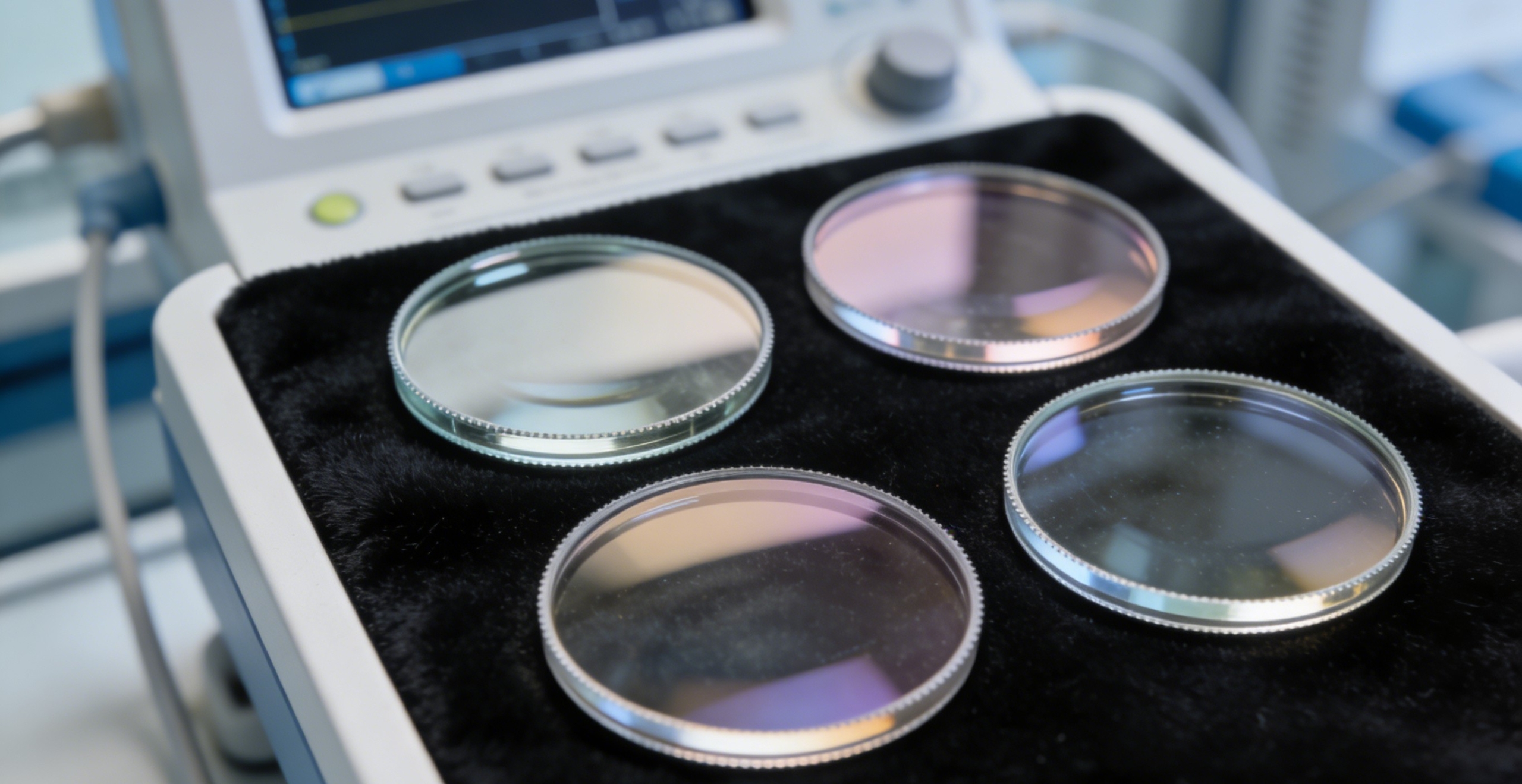
In medical equipment, optical glass filters play a vital role in diagnostic imaging, fluorescence detection, and light-based therapies. They isolate specific wavelengths of light to ensure precise measurements and clear imaging results—critical for accurate diagnoses and treatment. For example, in diagnostic imaging devices, optical filters help isolate the wavelengths needed for X-rays, ultrasound, and fluorescence detection, eliminating background noise and ensuring medical professionals get reliable data. They also support light-based therapies by filtering out harmful or irrelevant light, protecting both equipment and patients while maintaining treatment precision.

2. Automotive Systems

Automotive systems rely heavily on optical glass filters to enhance safety and performance. These filters are integrated into cameras, LiDAR (Light Detection and Ranging), and driver-assistance sensors (ADAS) to improve visibility, reduce glare, and maintain performance in varying lighting conditions. Whether it’s filtering out harsh sunlight for in-car cameras or optimizing light transmission for LiDAR systems, optical glass filters ensure automotive sensors operate reliably—even in bright daylight, rain, or low-light environments. This contributes to safer driving and more efficient vehicle automation.

3. Industrial Automation

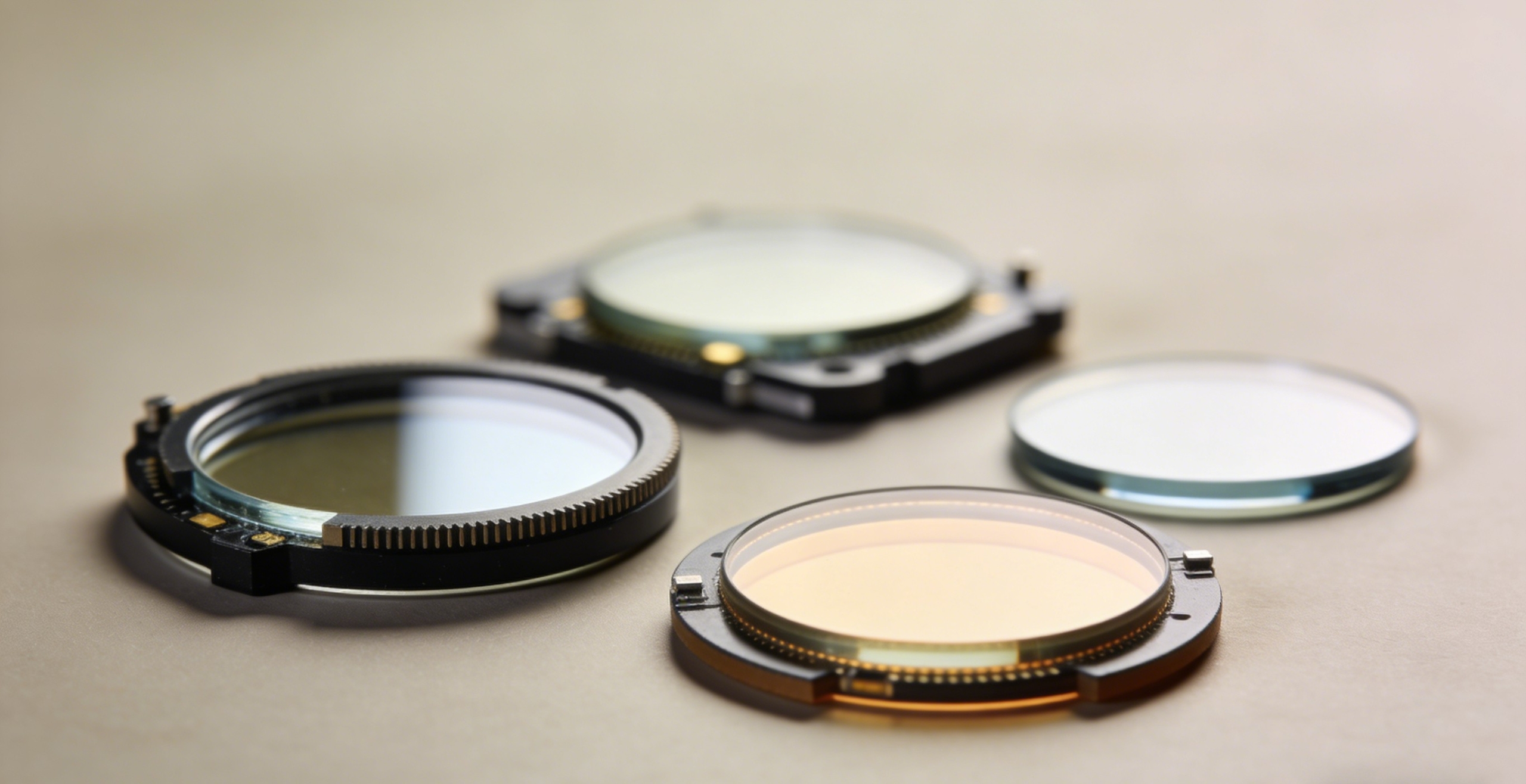
Industrial automation depends on optical glass filters for machine vision, quality inspection, and precision sensing. In manufacturing lines, these filters are used in vision systems to detect defects, measure components, and ensure product quality. They filter out unwanted light interference from factory lighting, dust, or environmental factors, allowing automation systems to operate with high accuracy. This reduces errors in production and improves overall operational efficiency, making them indispensable in modern manufacturing facilities.

4. Consumer Electronics

Consumer electronics such as cameras, smartphones, and projectors rely on optical glass filters to enhance user experience. In cameras and smartphones, filters improve image quality by isolating specific wavelengths, reducing glare, and boosting color accuracy. For projectors, they optimize light transmission to deliver clear, bright images even in well-lit rooms. These filters are small in size but powerful, ensuring consumer devices deliver consistent, high-quality performance.
From medical devices to automotive systems, industrial automation to consumer electronics, optical glass filters continue to enable innovation and high performance in modern technology. Their ability to control light precisely makes them a fundamental component across industries, supporting progress and reliability in every application.
Optical filters play a vital role in modern imaging and sensing devices. They control the light that reaches sensors or detectors, improving accuracy, reducing interference, and enhancing overall performance.
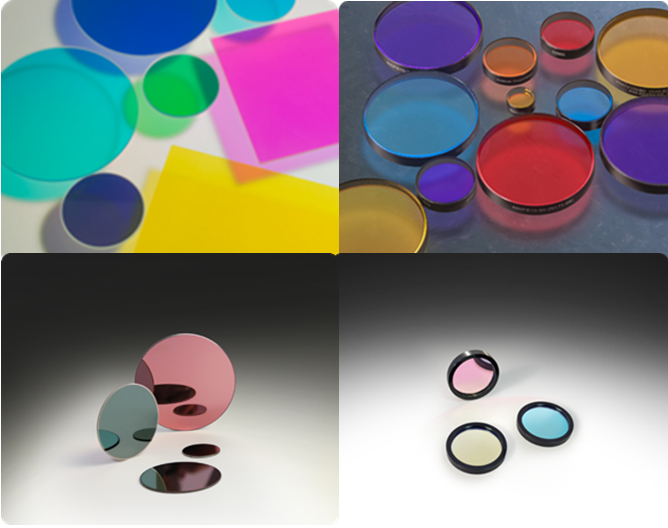
Different types of optical filters serve different purposes. Bandpass filters transmit light within a specific wavelength range, ideal for spectroscopy, medical instruments, and LiDAR systems. Longpass and shortpass filters block unwanted wavelengths while allowing desired light to pass, commonly used in cameras and optical sensors.
Neutral density filters reduce light intensity without changing color balance, making them useful in photography, microscopy, and laser systems. Color filters separate or enhance specific color ranges for improved image clarity and analysis.
In industrial applications, optical filters protect sensors from strong light, dust, and environmental interference. They increase measurement stability and reduce errors in automated inspection and quality control systems.
Understanding which filter to use helps engineers design more efficient, reliable, and high-performance optical systems for a wide range of industries.
Optical glass is a foundational material in many precision optical systems. Unlike ordinary glass, it is manufactured to strict standards for clarity, uniformity, and light transmission. These properties make it ideal for lenses, prisms, light filters, and imaging components.
One key characteristic of optical glass is its refractive index, which determines how it bends and focuses light. Different formulations are designed for specific wavelengths, including visible, ultraviolet, and infrared regions. Choosing the correct refractive index ensures optimal performance in cameras, sensors, and medical devices.
Transmission rate is equally important. High-quality optical glass minimizes light absorption and scattering, allowing more light to pass through with minimal loss. This improves sensitivity in low-light conditions and increases overall system efficiency.
Durability is another major advantage. Optical glass can withstand temperature changes, humidity, and physical stress better than many plastic alternatives. It maintains its shape and optical properties over time, making it suitable for industrial, automotive, and outdoor applications.
Whether for imaging, sensing, or lighting, selecting the right optical glass ensures reliability, stability, and long-term performance in critical optical systems.

A long pass filter (LPF), also known as a long-wave pass filter or high-pass optical filter, is an optical component that transmits light with longer wavelengths while blocking shorter wavelengths. In simple terms: Shorter wavelengths (UV, blue, violet) → reflected or absorbed Longer wavelengths (green, yellow, red, NIR) → transmitted efficiently Long pass filters are […]