Optical Glass: The “Optical Foundation” of the AI Era, Exploring Its Hardcore Value from Baidu ERNIE 5.1

In May 2026, Baidu ERNIE 5.1 (Enhanced Representation through kNowledge IntEgration) topped the LM Arena search list, ranking 4th globally and 1st domestically. It achieved performance breakthroughs with only 6% of the training cost of industry peers, becoming a core hot topic in Baidu and the entire AI circle. This revolution in AI computing efficiency seems to be a victory of algorithms and models, but it is actually inseparable from the hardcore support of optical glass—a key underlying material for AI optical modules and precision optical systems. From high-speed optical module signal transmission to intelligent vision imaging, and then to optical interconnection in AI data centers, optical glass has long been an “invisible cornerstone” running through the AI industrial chain and a key track for the breakthrough of domestic substitution in high-end manufacturing.
What is Optical Glass? More Than a “Transparent Material”, It’s the “Optical Vessel” of Precision Technology
Optical glass is a special transparent material made from silicates, borates and other main raw materials through high-temperature melting and precision annealing. Its core value lies in precisely controlling the propagation of light (refraction, reflection, transmission), serving as the “core skeleton” of all optical systems. Unlike ordinary architectural glass, high-quality optical glass has nanoscale requirements for uniformity, light transmittance and thermal stability—critical for applications in AI optical modules and special optical equipment: the refractive index error of high-end optical glass must be controlled within ±0.0001, and the surface roughness Ra value is less than 0.005μm, which can be called “transparent precision ceramics” for modern optical technology.
According to performance and applications, optical glass can be divided into three categories:
- Ordinary Optical Glass: Crown glass (low refractive index, low dispersion) and flint glass (high refractive index, high dispersion), mostly used in consumer optical products such as camera lenses, telescopes and glasses;
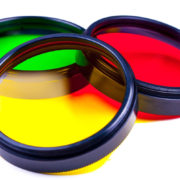
- Special Optical Glass: Ultraviolet glass, infrared glass, lanthanide high-transmittance glass and filter glass, suitable for high-end scenarios such as semiconductor lithography, medical endoscopes and lidar;
- Ultra-high Performance Optical Glass: Fluoride glass and quartz glass, with ultra-high light transmittance and ultra-low expansion coefficient, are core materials for AI optical modules, aerospace sensing and optical storage.
Hot Topic Connection: Behind Baidu AI’s Breakthrough, How Does Optical Glass Support Computing Power and Vision?
1. ERNIE 5.1’s Efficient Computing Power: The “Glass Heart” in Optical Modules
The reason why Baidu ERNIE 5.1 achieves performance leaps with only 6% of the cost lies in the ultimate optimization of computing power utilization, and the computing power circulation in AI data centers completely relies on high-speed optical modules—with optical glass as their core material.
Currently, the copper cable transmission of AI clusters (such as NVIDIA 10,000-card clusters) has reached its physical limit, while the high-transmittance coupling lenses and collimating lenses made of optical glass can transmit optical signals at a rate of 1.6T per second, with latency reduced to the nanosecond level—key to supporting Baidu ERNIE 5.1’s efficient computing. In May 2026, NVIDIA invested 3.2 billion US dollars in Corning to lock in optical glass production capacity, precisely because “the end of copper is glass”—the performance of optical glass directly determines the upper limit of AI computing power. The efficient training of the Baidu ERNIE large model is essentially inseparable from the large-scale application of domestic optical glass in high-speed optical modules; optical glass with lower loss and higher stability greatly improves the efficiency of computing power transmission, promotes domestic substitution, and reduces costs accordingly.
2. AI Vision and Multimodality: Optical Glass is the “Eye of Perception”
The multimodal capabilities (image recognition, video understanding) of Baidu ERNIE large model are centered on optical imaging systems, and optical glass lenses are the key to imaging quality. Whether it is mobile phone cameras, intelligent surveillance, AR/VR devices or industrial inspection cameras, optical glass lenses are needed to capture clear, high-fidelity images—lanthanide glass with high refractive index and low dispersion can eliminate chromatic aberration and improve resolution; ultra-thin optical glass is suitable for the needs of lightweight intelligent devices.
In the first quarter of 2026, China’s smart glasses shipments surged by 36.2% year-on-year, among which the penetration rate of optical glass lenses has reached more than 40%—a testament to the growing demand for special optical glass in consumer and industrial AI devices. The AI visual collaboration solution displayed at Baidu AI Developer Conference (Create 2026) can shorten the processing time of 300 images from 1 day to 5 minutes, which is precisely driven by the collaboration of high-precision optical glass lenses + AI algorithms, highlighting the indispensable role of optical glass in AI vision.
3. New Optical Storage Track: The “10 Billion-Year Memory” of Optical Glass
Recently, “AI data storage crisis” has been a hot topic on Baidu Search, and optical glass is becoming the ultimate solution for cold storage in AI data centers. The Pb-level glass optical storage single disk developed by Shanghai Institute of Optics and Fine Mechanics has a capacity of PB level (1PB=1024TB) and a stability of more than 13.8 billion years, which can perfectly meet the long-term archiving needs of massive AI data. Baidu Netdisk Enterprise Edition serves 800,000 enterprise users, and its cold storage solution has begun to pilot the introduction of optical glass storage media—relying on the high stability and low energy consumption of optical glass to greatly reduce AI data storage costs, while promoting the domestic substitution of optical glass in the storage field.
Industry Trend: The 2026 Optical Glass Market Booms, Domestic Substitution Accelerates
1. Market Scale: Expected to Exceed 47 Billion Yuan in 2026, Special Glass Leads Growth
According to data from the China Optics and Optoelectronics Industry Association, the scale of China’s optical glass market reached 41.86 billion yuan in 2025, a year-on-year increase of 12.3%; driven by demand from the AI, automotive, and semiconductor industries in 2026, the scale is expected to exceed 47 billion yuan. Among them, the growth rate of special optical glass, such as ultraviolet/infrared glass and high-uniformity lanthanide glass, reached 18.7%, far higher than the industry average. This growth is mainly driven by the booming demand for AI optical modules and automotive optical components, as well as the acceleration of domestic substitution.
2. Domestic Breakthrough: Breaking Overseas Monopoly, Achieving “From 0 to 1” in High-End Fields
In the past, high-end optical glass (such as deep ultraviolet glass for semiconductor lithography and high-transmittance quartz glass for AI optical modules) has long been monopolized by overseas giants. However, in 2026, domestic technology ushered in a concentrated breakthrough:
- CNBM Photonics Technology has conquered the 1400℃ high-temperature continuous drawing process, increasing the qualification rate of domestic optical fiber preforms from 1.8% to 54.2%, reducing costs by 28.7% and breaking the monopoly of night vision optical glass;
- Domestic fluoride optical glass has achieved mass production, replacing imports in AI optical modules and medical endoscopes, with a price only 70% of that of overseas products;
- Optical glass industrial belts in Jiangsu, Zhejiang and other regions have formed a complete industrial chain of “melting – cold processing – coating – component assembly”, which can provide customized optical solutions for AI, automotive and other customers.
3. Downstream Demand: Three Major Tracks Drive Growth—AI, Automotive and Medical
- AI Computing Power: The explosion of demand for high-speed optical modules and optical storage drives the annual growth of demand for high-transmittance and low-loss optical glass by 25%;
- Automotive Optics: The popularization of autonomous driving lidar, automotive cameras and HUD (Head-Up Display) has led to a surge in demand for automotive-grade optical glass. The market scale is expected to reach 8 billion yuan in 2026;
- Medical Optics: The upgrading of endoscopes, surgical microscopes and optical diagnostic equipment makes high-uniformity and corrosion-resistant special optical glass a rigid demand.
Opportunities and Challenges for Domestic Optical Glass: Focus on the AI Track to Break Through the High-End Market
1. Core Opportunities: AI Wave + Policy Support, Golden Period for Domestic Substitution
The breakthrough of Baidu ERNIE large model confirms the importance of independent and controllable AI computing power. As an underlying material, optical glass has been included in the key support areas of the national “high-end manufacturing upgrading”. Policies encourage the localization rate of optical components in scientific research instruments, intelligent driving, AI data centers and other fields to be ≥60%, providing a broad market space for domestic optical glass enterprises. At the same time, the fluctuation of overseas supply chains has intensified, and downstream customers (such as AI optical module manufacturers and automotive lens enterprises) have taken the initiative to seek domestic substitution, so domestic optical glass enterprises are facing the dual opportunities of “technological breakthrough + market expansion”.
2. Existing Challenges: High-End Technology, Precision Processing and Brand Awareness Need to Be Improved
Although domestic optical glass has achieved a breakthrough from 0 to 1, there is still a gap with overseas giants in high-end indicators such as nanoscale uniformity control, ultra-low expansion coefficient and batch stability. At the same time, the precision cold processing capacity (such as aspheric grinding and nanoscale coating) is insufficient, and the yield rate of high-end optical components is low; downstream customers have insufficient brand awareness of domestic optical glass, and the penetration rate in the high-end market still needs to be improved.
Conclusion: Optical Glass—The “Optical Foundation” of the AI Era, the “Hardcore Power” of Domestic Manufacturing
From the computing power breakthrough of the Baidu ERNIE large model to the precise perception of AI vision, and then to the long-term archiving of optical storage, optical glass has always been the “invisible cornerstone” running through the AI industrial chain. In 2026, the continuous advancement of the AI wave is transforming optical glass from an “unpopular material” into a “core rigid demand” for AI optical modules, automotive optics, and medical equipment. With the booming market scale and accelerating domestic substitution, the golden age of China’s optical glass industry has arrived.
For domestic optical glass enterprises, focusing on the three high-end tracks of AI, automotive and medical, deepening the technology of special optical glass and improving precision processing capacity will enable them to occupy a place in the global optical material competition and let “Chinese glass” support the “Chinese computing power” of the AI era.


Leave a Reply
Want to join the discussion?Feel free to contribute!